



Education as a Pillar of Prevention
International Day of Education 2026
Education plays a critical role in shaping resilient, inclusive societies
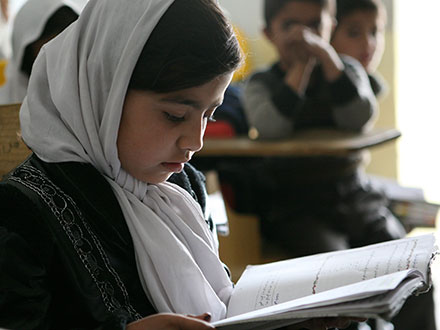
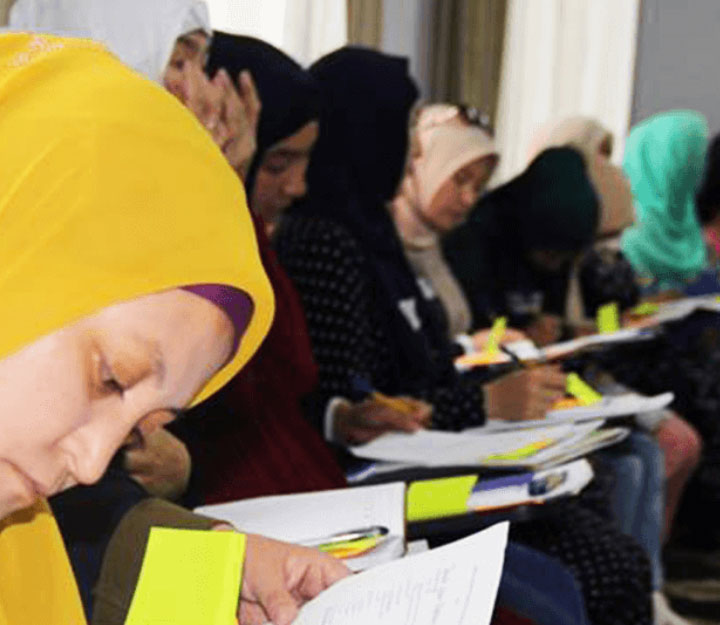
It also plays a crucial role in fostering resilience to violent extremism and terrorism. Schools and other learning spaces are not only sites for learning, but also environments where identities are shaped and values are reinforced. These same systems are ordinarily places that contribute positively to social cohesion and critical thinking, but they can also be sites where grievances emerge, marginalization occurs, or extremist narratives gain traction. Education systems can be exploited, particularly when educational actors and systems are without the proper resources and support.

At Hedayah, the International Centre of Excellence for Countering Extremism and Violent Extremism, we work at the intersection of education and the prevention of extremism and violent extremism. Hedayah strengthens the dual role that education plays, as both a tool for fostering resilience against extremism and an environment where vulnerable young people may encounter extremist influences. Through training and support, we help ensure that education policymakers, teachers, and school communities have the tools that they need to create safe learning environments that help address the root causes of violent extremism and prevent it from manifesting.
As the international community marks the International Day of Education, with its 2026 focus on youth as agents of change, Hedayah reflects on how education forms a vital strand of our efforts and our work with partners in preventing and countering extremism and violent extremism (P/CEVE).
A Holistic Education Approach
Hedayah takes a holistic approach to supporting the education sector to more effectively build resilience to P/CEVE. For Hedayah, our strategy for P/CEVE through education does not begin and end in the classroom. We work to support learners of all ages, and we have a strong focus on the role of youth as changemakers. We do this guided by a core objective of ensuring young people’s safety and resilience in formal education, in digital spaces, and in the community is protected.
Our efforts have included delivering school-based programs, supporting local civil society and community-based partners to implement programs that build, develop apps and tools, and analyse the local context. It also spans working with Governments and educators to develop and implement good practices, training, and workshops for teachers and research to better understand the impact of school-based initiatives. And importantly, it includes the development of practical resources and tools to support education systems and stakeholders in their own locally led P/CEVE efforts.
From Global Frameworks to Practical Tools: The GCTF Education Initiative
From 2023-2025, as the implementing partner for the Global Counter Terrorism Forum’s Initiative on Education for the Prevention and Countering of Violent Extremism Conducive to Terrorism – co-led by the European Union and Morocco, Hedayah worked to create good practice guides and resources that support prevention in the education space.
Building on the strong foundations of the Abu Dhabi Memorandum for Good Practices on Education and Countering Violent Extremism (endorsed in 2014), Hedayah worked with the GCTF to add a new Addendum to the Abu Dhabi Memorandum for Good Practices on Education and Countering Violent Extremism (adopted in 2025) to update this valuable practice guide with information that better reflects the needs and requirements when it comes to preventing extremist recruitment and supporting resilience for today’s generation of youth.
Through this initiative, Hedayah produced three key resources that were formally adopted by the GCTF to support practical implementation, reflecting one of our core strategic values: ensuring that all our work is impact-oriented and grounded in evidence. These resources include:
- A research brief with evidence-based recommendations to strengthen the Abu Dhabi Memorandum
- A Training-of-Trainers (ToT) curriculum for stakeholders to understand and put into practice the practices recommended by the Abu Dhabi Memorandum
- A Monitoring and Evaluation (M&E) Toolkit to help actors measure the impact of their education and P/CEVE projects
Together, these tools contribute to a long-standing need in the field: translating principles into practice while maintaining evidence and accountability.
Evidence from Schools and Education Systems
Understanding what works in education-based P/CEVE remains essential. That is why we have been working with partners in North Macedonia who have undertaken vital research that strengthens future programming by providing evidence on the impact of school-based interventions in areas of the country identified with higher vulnerability to extremism. Hedayah worked with Nexus Civil Concept on this research as part of Hedayah’s Strengthening Resilience to Violent Extremism (STRIVE) Global Program, funded by the European Union.
The report, ‘Understanding the Impact and Value of Preventing and Countering Violent Extremism (P/CVE)) Activities Implemented in School Setting in North Macedonia’, contributes to a growing evidence base on how locally grounded, well-evaluated educational programming can strengthen resilience and reduce risk factors.
Education in Digital Spaces: Youth, Media Literacy, and Online Extremism
Education today extends far beyond classrooms. In Southeast Asia, Hedayah has been working with stakeholders in Malaysia, Indonesia, Thailand, and the Philippines to better understand and support their efforts to prevent online extremism. Hedayah conducted qualitative research in Malaysia, in collaboration with co-authors from the Southeast Asia Centre for Counter-Terrorism (SEARCCT) and in Indonesia, with support from Indonesia’s National Counterterrorism Agency (BNPT), to examine terrorist use of the internet and responses to online extremism – filling knowledge gaps identified in the capacity building workshops.
The research concluded in 2025, with two country-specific reports published:
- Understanding and Preventing Online Extremism & Violent Extremism in Southeast Asia – Malaysia Country Report.
- Understanding and Preventing Online Extremism & Violent Extremism in Southeast Asia – Indonesia Country Report.
With high levels of youth connectivity, digital spaces have become key arenas for learning, identity formation, and engagement. At the same time, they can also become hotspots for extremist recruitment and influence. The research highlights how extremist actors adapt narratives to platform dynamics and underscore the importance of:
- Media and information literacy
- Digital resilience
- Coordination between governments, civil society, educators, and online platforms
The reports also highlight ongoing initiatives and approaches that empower youth and support education-driven responses to online harms.
Findings from these reports were also discussed and shared at Hedayah’s International Research Conference 2025 in Brussels.
Linking Research, Practice, and Policy
Hedayah’s education work is also reflected in its convening and thought leadership. At Hedayah’s International Research Conference 2025, Thematic Panel Three focused on Preventing Extremism Through Education, marking a decade since the adoption of the Abu Dhabi Memorandum.
The panel explored lessons from recent research, including findings from the GCTF Education Initiative, and examined how evidence can be translated into policy and programming, with a focus on monitoring, evaluation, and learning. These discussions, now available as recorded resources, continue to support practitioners and policymakers working at the intersection of education and P/CEVE.
Looking Ahead
Across our work, Hedayah recognizes that education is central to long-term prevention, particularly when it empowers young people, strengthens systems, and is grounded in evidence. From global frameworks to national research, from classrooms to digital spaces, Hedayah remains committed to supporting education as a key pillar in P/CEVE.
By connecting research, practice, and policy, education continues to serve not only as a preventive tool but as a foundation for more resilient and inclusive societies.